
Cast
-
 Andrea Riseborough as Tasya Vos
 -
 Christopher Abbott as Colin Tate
 -
 Jennifer Jason Leigh as Girder
 -
 Sean Bean as John Parse
 -
 Tuppence Middleton as Ava Parse
 -
 Rossif Sutherland as Michael Vos
 -
 Kaniehtiio Horn as Reeta
 -
 Raoul Bhaneja as Eddie
 -
 Gage Graham-Arbuthnot as Ira Vos
 -
 Gabrielle Graham as Holly
 -
 Christopher Jacot as Reid Parse
 -
 Hanneke Talbot as Katherine
 -
 Deragh Campbell as Moira
 -
 Ayesha Mansur Gonsalves as Martha
 - Matthew Garlick as Elio
-
 Daniel Junghuan Park as Policeman
 -
 Hrant Alianak as Lead Technician
 -
 Rachael Crawford as Dr. Melis
 -
 Kathy Maloney as Reporter
 - Megan Vincent as Alice
-
 Danny Waugh as Patrick
 -
 Dorren Lee as Tess
 -
 Doug MacLeod as Alex Boyko
Crew
- Kent McIntyre as Art Direction
- Brittany Morrison as Set Decoration
- Murray Barber as Visual Effects Supervisor
- Rory Knight-Jones as Visual Effects Producer
- Dorota Mitoraj as Key Makeup Artist
- Sasha Pawluk as Special Effects Makeup Artist
- Larissa Malarek as Third Assistant Director
- Natasha Aresenault as Set Production Assistant
- Danielle Depeyre as Script Supervisor
-
 Erin Norah Thompson as Production Coordinator
 - Manh Hiep Pham as First Assistant Art Direction
- Shelby Lynn Black as First Assistant Art Direction
- Shelby Lynn Black as Set Designer
- Carolyn Li as Second Assistant Art Director
- Erika Lobko as Set Buyer
- John Bean as Lead Set Dresser
- Rhiannon Dunets as Set Dresser
- Craig Harris as Set Dresser
- Mike Genereux as Property Master
- Nika Belianina as On Set Props
- Yoann Malnati as "A" Camera Operator
- Yoann Malnati as Steadicam Operator
- Craig Morgan as First Assistant "A" Camera
- Augustina Saygnavong as Second Assistant "A" Camera
- Brett Hurd as "B" Camera Operator
- Margaret Demchenko as First Assistant "B" Camera
- Ashley Binette as Second Assistant "B" Camera
- Johnny Askwith as "C" Camera Operator
- Adam Craig as First Assistant "C" Camera
- Rob Duckworth as Second Assistant "C" Camera
- Benjamin Martin Cocher as Epk Camera Operator
- Mike Sokoluk as Key Grip
- Chris Monk as Best Boy Grip
- Jayme Hutchinson as Dolly Grip
- Chris LeBlanc as Grip
- Brad Usher as Grip
- Loreen Ruddock as Gaffer
-
 Caitlin Cronenberg as Still Photographer
 - Amanda Matlovich as Still Photographer
- Jeremy Jemec as Best Boy Electric
- Don Anderson as Electrician
- Blayne Badge as Electrician
- Deirdre Bowen as Casting
- Pam Dixon as Casting
- Jim Troy as Generator Operator
- Scott Wales as Generator Operator
- Ken Porter as Boom Operator
- Martin Pavey as Sound Designer
- Martin Pavey as Supervising Sound Editor
- Phillip Stall as Sound Mixer
- Kim Forrest as Assistant Costume Designer
- Joey Watson as Set Supervisor
- Rivkah Weisdorf as Truck Supervisor
- Sara Brzozowski as Costumer
-
 Mara Zigler as Costumer
 - Tracy Bentley as Assistant Makeup Artist
- Renee Chan as Key Hair Stylist
- Debra Way as Assistant Hairstylist
- Phil Carvalho as Construction Coordinator
- Ryan O'Connell as Head Carpenter
- Kirk Middleton as Key Special Effects
- Christopher Warre Smets as Epk Producer
- Elsa Scruton as Transportation Coordinator
- Kelly Gilbert as Production Accountant
- Christopher Richards as Casting Associate
- Hashim Alsaraf as Post Production Supervisor
- Andrew Starke as Post Production Supervisor
- Eric Harrison as Dailies Operator
- Jim Fleming as Digital Intermediate Colorist
- Frank Biasi as Digital Intermediate Editor
- Johnathan Wei Dickinson as Digital Intermediate Editor
- Darcy Arthurs as Digital Intermediate Producer
- Margaret Hutz as Digital Imaging Technician
- Sydney Cowper as First Assistant Editor
- Grace Lan as Digital Intermediate
- Nikki Ruck as Dialogue Editor
-
 Rob Davidson as Sound Mix Technician
 - Ian Waggott as Foley Artist
- Ben Cross as Foley Mixer
- Amelia Chiarelli as ADR Recordist
-
 Matthew Hannam as Title Designer
 - Sam Hudecki as Main Title Designer
- Bryan Jones as Visual Effects Supervisor
- Mauricio Cuencas as Visual Effects Coordinator
- Jamie Harris as VFX Editor
- Andrea Pirisi as VFX Editor
- Jonathan Williams as Rotoscoping Artist
- Haakon Gustavsen as Digital Compositor
- Paola Maiorana as Digital Compositor
- Jack Proops as Digital Compositor
- Andrés Talegón as Digital Compositor
- Chris Hutchison as Lead Animator
- Will Taggart as Music Coordinator
- Ian Neil as Music Supervisor
- David Antonacci as Special Effects Technician
- Ian Cole as Special Effects Technician
- Spencer Wowk as Special Effects Technician
- Dave Bishop as Executive Producer
- Dan Martin as Special Effects Makeup Artist
- Dan Martin as Makeup Designer
-
 Brandon Cronenberg as Director
 - Davide Losi as Sculptor
-
 Niv Fichman as Producer
 - Andrew Starke as Producer
- Brandon Cronenberg as Writer
- Fraser Ash as Producer
-
 Kevin Krikst as Producer
 - Matthew Hannam as Editor
-
 Karim Hussain as Director of Photography
 -
 Jim Williams as Original Music Composer
 -
 Gary Hamilton as Executive Producer
 - Ryan Hamilton as Executive Producer
-
 Ying Ye as Executive Producer
 - Adrian Love as Executive Producer
-
 Noah Segal as Executive Producer
 - Steven Squillante as Executive Producer
- Tony Roman as Executive Producer
- David U. Lee as Executive Producer
- Daniel Negret as Executive Producer
- Vaishali Mistry as Executive Producer
- Rupert Lazarus as Production Design
- Aline Gilmore as Costume Designer
- Rob Cotterill as Supervising Producer
- Steve Solomos as Co-Producer
- Lori Fischburg as Production Manager
- Rob Cotterill as First Assistant Director
- Lawrence Ng as Second Assistant Director
- Derek Liscoumb as Special Effects Supervisor
Budget
2500000
Revenue
911000
Movie info from
Socialize

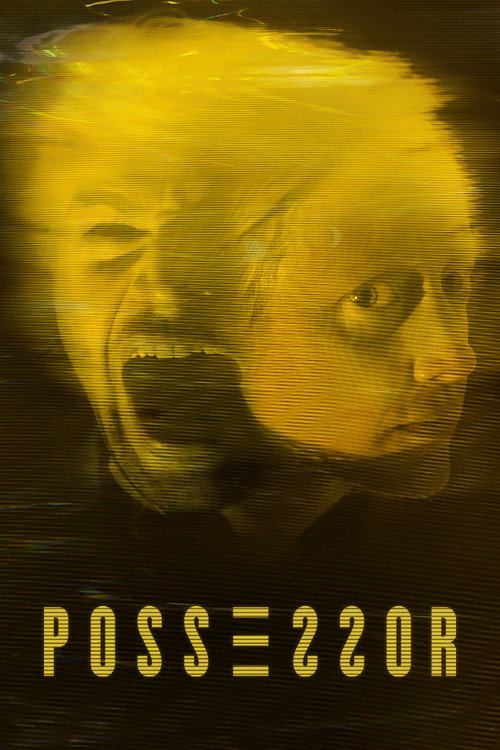
I like David Cronenberg’s work, and I want to like his son Brandon’s as well. But there’s something about the younger Cronenberg that isn’t quite connecting with me. I watched Infinity Pool, Brandon’s third film, awhile back and thought: interesting ideas, interesting visuals, just… something doesn’t sit right. I get much the same vibe with Possessor. The movie oozes style, it has an atmosphere that demands deep things are being said. But when I listen for those deep things, I hear barely a whisper. This movie, it whispers to me: capitalism demands we deny our humanity in service of the corporation. And I whisper back: yes, and?
Possessor is a striking film, to be sure, with pacing and cinematography that put me in mind of movies like The Shining, Alien, or Blade Runner. It’s full of shots that really challenge traditional filmmaking, and they are static enough to give you plenty of time to absorb them, think about them. Cronenberg, for example, likes to place his subjects hard left or right on the screen, looking off the short side — with very little to balance on the right. It’s almost anti-composition, and intensely alienating. It’s like the movie is forcing you to not make eye contact.

There’s a grue on my left about to eat me, right? I really should have brought a candle.
But then this composition is used shot after shot. It starts to draw attention to itself. It starts daring you to explain why the movie looks this way. Well, the movie wants me to feel alienated. The characters feel alienated. They aren’t willing to look directly at what they are doing either. And that’s fine as far as it goes, but… maybe that’s all there is?
If you think back to The Shining, Kubrick likes to use long shots of empty hallways in the Overlook. Centered, symmetrical, they feel like pits you are falling into. All the emptiness in front is a bit unnerving; it makes me want to look behind the camera. These shots, composed to be perfectly balanced, perfectly stable, emphasize the solidity and impermanence of the Overlook and somehow end up so much more threatening. When I think about these shots, I can understand why they establish the mood; what they tell us about little Danny Torrance’s relationship to the hotel. I really struggle to find that connection with Possessor.
I also find myself disinclined to try, because Cronenberg’s narrative vision feels underdeveloped. We have an interesting science fiction concept: what if assassins could take over the bodies of people close to their targets? Murder for profit is already something that forces you to disassociate somewhat from what it is you are doing. But if you were actually in someone’s head… what would that do to you?
That’s a good question, but at this point you’re committed to a certain amount of world-building. We have a world where technology allows assassins the ability to possess people. It’s apparently one that requires a lot of infrastructure, because we see a street team kidnap Tate and prep him for Vos’s takeover, and that requires van and several people. Vos’s own prep requires at least a handler and a medical tech. It’s hard and there are lots of people involved, which says to me: people are going to know this is possible. This can’t be a perfect secret. So, then, why are there no defenses for this sort of thing? Narratively it would make more sense if Vos was psychic and unique; but this is what seems like an industrialized form of assassination that operates in a world entirely unaware that such things exist.
That’s a big thing. There are other, smaller things as well. After Vos takes over Tate’s body, Colin (as Colin) explains to his fiancé Ava that he’d flown back from a business trip late that night, and he might have to fly out again. Good cover story; but when we see him actually at work, he’s wearing what looks like a jumpsuit, wearing VR goggles, watching through people’s webcams to identify what kinds of curtains they have.
This does not feel like the kind of job where you need to fly out for business pretty often. This is Black Mirror, live-in-a-dormitory work. It’s not like Ava doesn’t know; the company is owned by Ava’s father John, who gave Colin the company a burger-flipper-quality job (and John doubts Colin can even do that). Why even give him a job?
Anyway, here in the real world, image recognition was good enough by 2020 this kind of work would have been automated.
I often forgive much lower-budget movies this kind of sloppiness, but that’s because those movies are often intended to be spectacle first, or just a fun ride, or something really goofy. This wears its art pretensions on its sleeve, so I expect it to do a little bit more of the work. It’s true our character is experiencing a psychic dissolution of the self so maybe we shouldn’t expect total coherence, but that dissolution of the self is predicated on the technology existing in a coherent universe. And I just don’t see one where people don’t know these techno-assassins exist or where burger-flippers have to fly places for travel. It’s sloppy world-building, and to say Something Really Deep in a science fiction story you need your fictional science to feel real. This just does not.